HARD: diagnose the work
HARD reveals the four conditions that leave a work part underpowered.
H · Hazy Priorities
A · Avoided Ownership
R · Random Expectations
D · Data-less Results

The Daily Leadership Discipline for Better Results, Stronger Ownership, and Greater Independence
Work is HARD. Give it POWER.
On Monday morning, the eleven priorities became fourteen.
The meeting had been scheduled to reduce them.
That was the first problem.
UNDERPOWERED is a story-driven management book for capable people accountable for work that must move with and through people. It explains why work became HARD and gives readers one Daily Leadership Discipline they can use before the next meeting ends.
Proposal, competitive analysis, detailed chapter outline, introduction, sample chapters, and full manuscript are available for review.
This page is the public book brief: the hook, reader need, intellectual property, market position, chapter journey, organizational buying case, and author platform. The complete proposal and manuscript are ready for serious review.
Readers diagnose why a work part is underpowered, use EASY to give it POWER, and create a measurable return: better Results, stronger Ownership, greater Independence, and more valuable human hours.
HARD reveals the four conditions that leave a work part underpowered.
EASY gives readers four Daily Leadership moves for the work already in front of them.
POWER means the work has one Priority, one Owner, one Expectation, and one Result—enough definition for the appropriate person to move it responsibly.
The book shows what becomes meaningfully different because the leader led—and what that difference returns to the organization and the people doing the work.
UNDERPOWERED combines a distinctive title and urgent problem with proprietary language, a practical reader experience, an established author platform, and clear expansion paths beyond the bookstore.
UNDERPOWERED gives a memorable name to the experience of important work that keeps stalling, climbing back up, or depending on one more rescue.
HARD → EASY → POWER → Results, Ownership, and Independence is compact enough to remember and substantial enough to carry a full business book.
The reader closes the book with exact questions and behaviors for meetings, handoffs, one-on-ones, project reviews, and work that is already stuck.
The primary reader can buy one copy. Employers, executive groups, associations, leadership programs, business schools, and consulting clients can buy hundreds.
Bryan already delivers the ideas through executive advisory, coaching, workshops, keynotes, assessments, and organizational installations.
The book supports diagnostics, workbooks, facilitator tools, digital learning, speaking, team adoption, and the EASY 30-Day Installation without changing the core architecture.
“Fine. Which one is first?”UNDERPOWERED · Introduction
The room answered with professional silence.
The book opens inside Avenor Group, where CEO Mara Bennett schedules a meeting to reduce eleven priorities and leaves with fourteen. Her question—“Which one is first?”—reveals the condition the book names: work can be important, staffed, discussed, and still lack enough power to move.
From that room, UNDERPOWERED follows the repeated leadership cycle of Remind, Rescue, and Recover. Leaders remind people about work, step back in to rescue it, and then use nights, weekends, or the next quiet hour to recover the work only they can finish.
The reader receives a management book carried by stories: a recognizable workplace mirror, a precise diagnosis, a Daily Leadership Discipline, and exact language that can be used on Monday.
Work crosses more functions, channels, tools, time zones, and human–AI handoffs. Priorities can change before the last priority has been translated. More people touch the work, while fewer moments are reserved to make it ready to move.
Messages, meetings, projects, dashboards, and urgent requests compete for finite attention. Every additional handoff creates another place where Priority, Owner, Expectation, or Result can disappear.
Managers increasingly lead people while carrying substantial individual work. They have less protected time to translate strategy, make tradeoffs, activate ownership, set the standard, and inspect movement before the next demand arrives.
The leader repeats what matters because the priority or expectation did not hold.
The leader steps back into work whose ownership, authority, or result was never strong enough to move.
The leader uses the remaining hours to complete the work that leadership intervention displaced.
Microsoft found that 48% of employees and 52% of leaders say their work feels chaotic and fragmented.
Microsoft Work Trend Index, 2025 ↗The same Microsoft study found that the average employee is interrupted every two minutes by meetings, email, or chat.
Microsoft Work Trend Index, 2025 ↗Gallup reports that 97% of U.S. managers also carry individual-contributor work, consuming a median 40% of their time.
Gallup, 2026 ↗Only 26% of AI users report consistent leadership alignment. Organizational factors account for 67% of reported AI impact.
Microsoft Work Trend Index, 2026 ↗UNDERPOWERED is not a replacement operating system. It is the Daily Leadership Discipline that improves how work moves inside the strategy, project method, technology, workflow, and culture already in place.
Annual plans, scorecards, OKRs, EOS, and enterprise priorities still define where the organization is going. EASY helps the active work move with a Priority, Owner, Expectation, and Result.
Agile, Scrum, Kanban, project plans, and work-management platforms still organize the workflow. EASY strengthens the human handoffs inside them.
The same discipline applies to enterprise strategy, a manager’s team, a cross-functional project, a frontline handoff, or one person managing up.
A person can use the questions while leading down, up, across, or inward. The scope changes. The discipline holds.
UNDERPOWERED enters an active business-book conversation about friction, productivity, organizational change, leadership practice, and AI-era work—then moves closer to the daily exchange of work than the leading titles around it.
Reset and Co-Intelligence show strong appetite for practical books that help readers navigate changing work.
The Friction Project addresses organizational friction, while Slow Productivity addresses the pace and quality of knowledge work. UNDERPOWERED gives the reader a distinct unit of action: the defined work part moving with and through people.
The manuscript progresses through story, diagnosis, discipline, application, and return. Each chapter advances the same architecture rather than introducing a stack of competing frameworks.
Mara Bennett enters a Monday meeting with eleven priorities and leaves with fourteen, exposing the condition that drives the book.
The workplace changed faster than the leadership habits used to move work with and through people.
Readers diagnose Hazy Priorities, Avoided Ownership, Random Expectations, and Data-less Results in one work part they carry.
Choose what deserves protected attention now and make the tradeoff visible by deciding what descends.
Make one capable person the visible steward of a defined outcome, with enough authority, clear boundaries, and support to move it.
Make one expectation strong enough that the people involved share what good looks like.
Make the result and evidence of movement visible early enough to learn, adjust, and decide what happens next.
Compress the discipline into the 1–1–1–1 POWER check and show how power can be created from any legitimate seat.
Turn insight into repeated practice through the 20-minute EASY huddle, small-group adoption, and a seven-day field test.
Show how the discipline returns better Results, stronger Ownership, greater Independence, and more valuable human hours.
Send the reader back into work with one defined work part and one immediate leadership move.
The proposal defines the reader by accountability rather than title. That expands the trade audience while preserving the central use case: consequential work that must move with and through people.
“A capable person accountable for work that must move with and through people.”
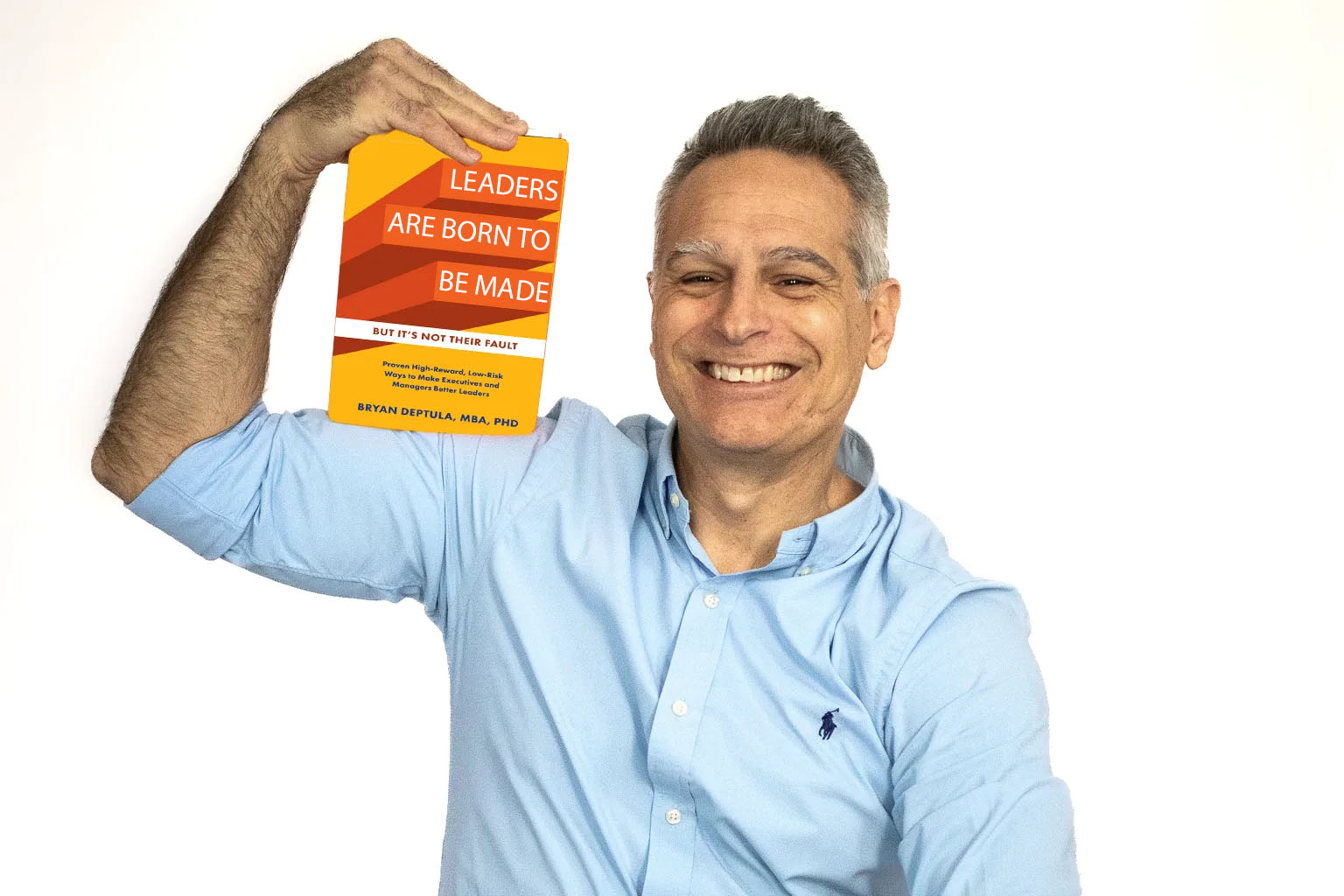
Dr. Bryan Deptula, PhD, MBA, brings five forms of credibility to UNDERPOWERED: real-world operating scale, academic rigor, a public speaking platform, active business ownership, and sustained advisory work inside leadership rooms.
The manuscript draws from the intersection of those experiences. Bryan has studied leadership, taught it, published it, coached it, and practiced it while real work, customers, payroll, deadlines, and people were waiting.
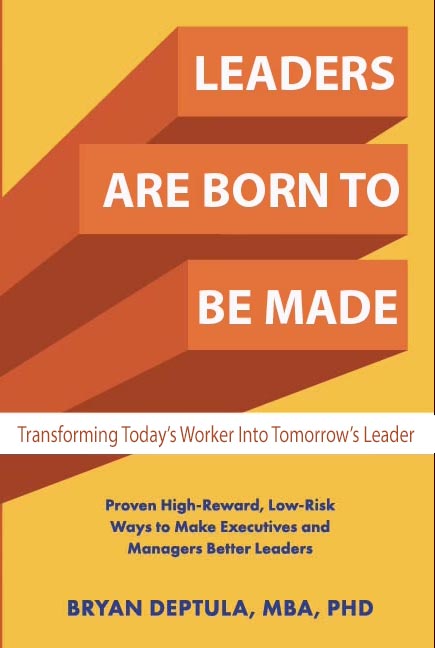
Leaders Are Born To Be Made was published by Indie Books International in 2024. UNDERPOWERED advances Bryan’s body of work from leader development into the daily discipline of moving work with and through people.
Led a 3,000-person international sales organization and managed a $30 million budget in his twenties.
Spent a decade in the business school and co-authored peer-reviewed work on leadership, mentoring, and performance.
His TED talk has more than 40,000 plays on TED.com, and his first commercial leadership book is already in market.
As CEO of BKD Leaders and a business owner, Bryan confronts capacity, customer, financial, and people decisions in real time.
He has advised, coached, and trained more than 10,000 Owners, Executives, and Managers across organizations and cultures.
Literary agents and acquiring editors can request the full proposal, introduction, sample chapters, full manuscript, or a direct publishing conversation with Dr. Bryan Deptula.